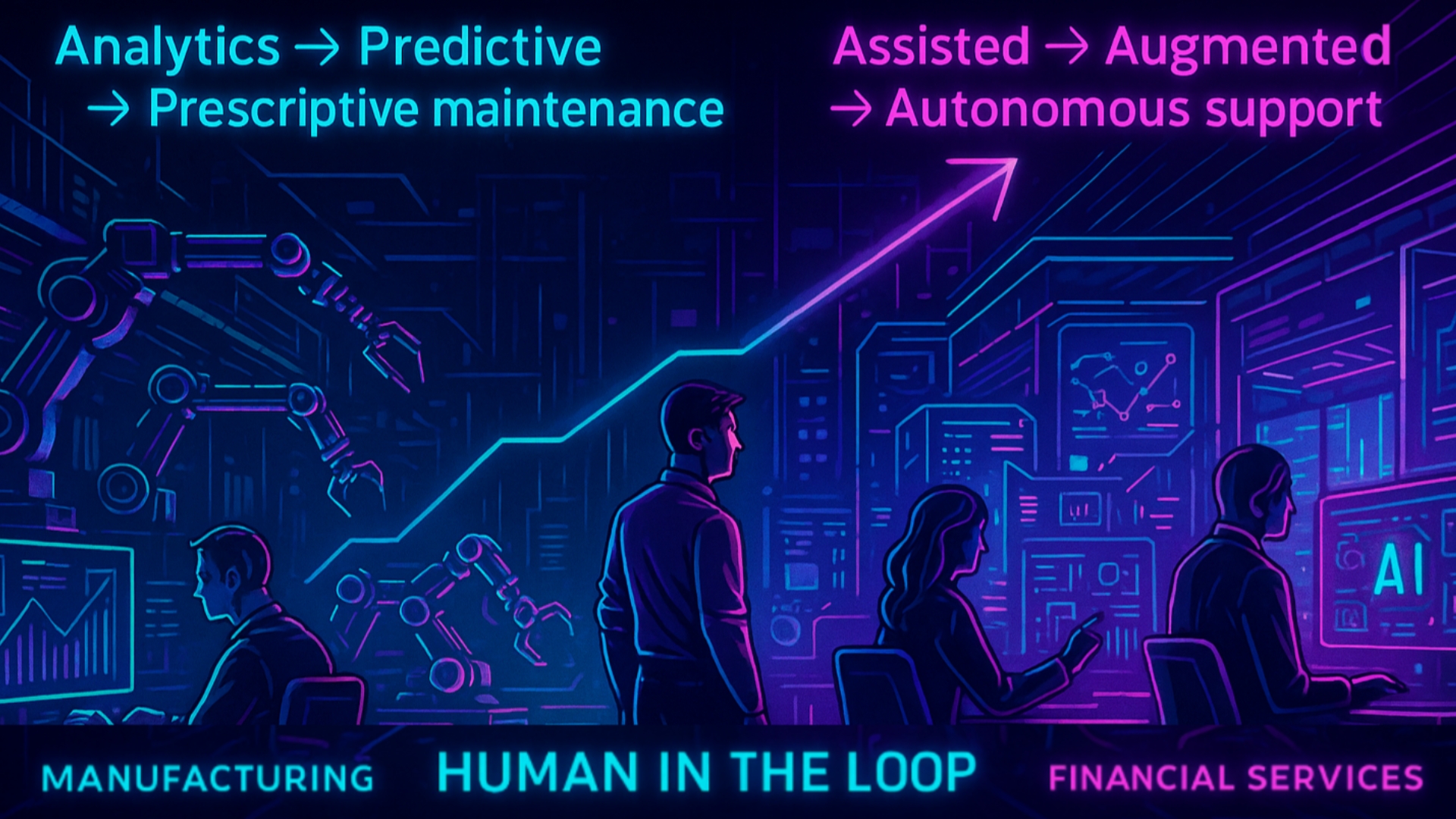
In manufacturing, we’ve seen the journey unfold:
Analytics → Predictive → Prescriptive maintenance.
Each step brought more autonomy — but also more accountability.
In financial services, the same shift is now underway:
Assisted → Augmented → Autonomous support.
And just like in factories, it can’t happen without the human in the loop.
Humans bring something AI still can’t: tacit knowledge, intuition, and judgment. Think of an Agentic AI system as a new employee: it must be trained, guided, and audited to perform within your company’s values and compliance boundaries.
One real advantage of AI isn’t just automation, it’s auditability.
With proper frameworks, AI enables full traceability, explainability, and RAG-based reasoning, making every decision transparent and reviewable.
That’s why we recommend building new governance frameworks designed around AI, not trying to retrofit old ones.
A strong AI governance model should include:
- A clear vision and structure aligned with business goals
- Skilled humans empowered to guide AI decisions
- Explainable, traceable systems that inspire trust
- AI treated like part of the workforce: accountable, measurable, and coachable
This approach builds trust, removes black boxes, and transforms compliance from a burden into a differentiator.
If you’re exploring how to design accountability and governance for Agentic AI in financial services, connect with [email protected]. Let’s make your ready for the autonomous future.